

The New Vacancy Tax: Implications for Hong Kong’s Real Estate Investors

Posted: Jan 8 2020Last Updated: Jan 8 2020

Vacancy Tax

Government taking active measures to cool off the housing market

8 January 2020 - It has been widely reasoned that the demonstrations over the past six months in Hong Kong have been driven, in part, by frustrations of young locals locked out of the residential property market due to price that have risen to incredible levels over the years. The government has attempted to ameliorate this situation through various measures though there is no easy fix to such a large, complex problem. One of the efforts underway is focused on forcing developers to release completed units to the market sooner and not withhold stock from the market to support higher prices.

Hong Kong government officials are moving forward with a bill that would impose a vacancy tax on those property developers that are found to be hoarding new flats. The bill, announced in June 2018, is being vetted by lawmakers though will be applied retroactively if it is passed.

A populist measure

This new vacancy tax statute was included in Chief Executive Carrie Lam’s policy address last year and is widely considered a populist nod to hopeful homebuyers left out of the local property market. It’s ultimately an attempt to help create more affordable housing. The law would go into effect three months after passage in Legco, but the actual implementation date is still pending.

The bill was initially introduced as a tool to penalize developers found to be hoarding newly completed flats to constrain supply. A broad spectrum of the public generally welcomed the measure while the pro-business camp was generally opposed. Now despite the widespread anti-government protests that have rocked the Territory, opposition politicians who initially favoured the proposal are said to be getting cold feet in their enthusiasm to embrace it.

Opposition to the bill

The opposition parties that said that they may filibuster the bill are reluctant to vote against it, since it is largely considered as step towards improving livelihoods across the board and doing so would be unpopular. Some legislators have, however, stated that they will throw roadblocks in the way of passage, citing inadequacies with the measures.

Critics in the Civic Party charge that Carrie Lam has been procrastinating in implementing the bill as a diversionary tactic to dissipate attention. The Civic Party has also called for progressively higher rates for developers if they withhold vacant units for longer periods.

Vacancy Tax Hong Kong

How does the government propose to levy the tax?

The Bill itself would be specifically aimed all newly completed homes that have been left empty, unsold or not rented out for more than six months in a calendar year. A year after a developer receives an occupation permit a flat is deemed finished.

The proposed vacancy tax would be calculated as being equivalent to rental income over two years as estimated by government personnel and based on market rates.

For example, if a brand new 500 sq. ft. flat rents for HK$40,000 (US$5,130) a month, the rateable value would then total HK$480,000. So the resulting yearly vacancy tax would be set at HK$960,000.

Developers would also be responsible for submitting to relevant government authorities yearly updates on the number of vacant new homes they have in their portfolios. If the law goes into effect, returns from the past 12 months will also need to be filed.

Other related issues with the vacancy tax bill

The government has also clarified that the vacancy tax would still be charged in the event a developer decided to transfer an unsold residence to an associated firm. This would include a subsidiary or holding company. It would also include an immediate family member or a company controlled by a member.

The secondary market will not be affected by the tax, so private homeowners holding on to empty flats will not be affected. Pro-establishment parties overall widely showed support for the bill.

Horace Cheung Kwok-kwan of the Democratic Alliance for the Betterment and Progress of Hong Kong, noted that he was happy to support any measure put forward to seriously tackle the local housing shortage. However, he hopes the government will continue to listen closely to public opinion and amend the bill accordingly.


Are there related opportunities for the real estate investor?

There may be an opportunity to buy new units at lower prices in the short term. If the Bill is passed, one can safely assume developers will be more eager to sell new units more quickly and adjust prices accordingly.
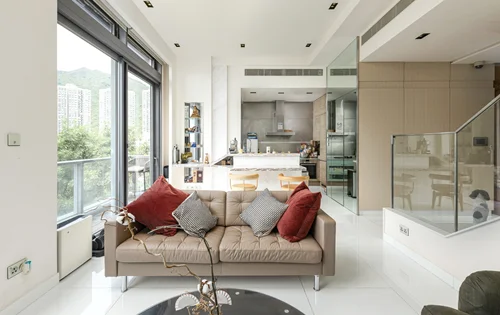
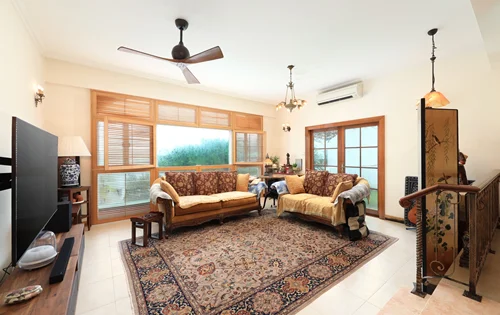
For homebuyers interested in existing properties (comprising the vast majority of the market), this may put a temporary damper on prices given the increase in supply coming from developers. However, they have already been adjusting their pricing strategy in anticipation of the bill, so the impact has already been priced into market values somewhat. Also, the impact would be mild at best as newly completed units typically account for less than 2% of total housing each year, and only a fraction of this would be sold at discounted prices to avoid the vacancy tax. It’s also very likely that developers will adjust their plans and simply stagger new builds into smaller releases, allowing them to sell within the prescribed six-month limit.

For owners, the market is driven by much larger forces that impact confidence than the vacancy tax bill, namely, the protests and overall economic conditions (local and global). Ultimately, though, the overall supply-demand balance still is likely to keep property values very much on the high side of the global scale.

You May Also Like

Will Beijing’s tighter capital-control rules dampen Hong Kong’s housing rebound?

New homes that Hong Kong developers will launch in the coming days and weeks will serve as a crucial test of the impact of Beijing’s latest capital-control measures, amid signs of recovery in the city’s residential property market.“Seemingly, a numb
By: OKAY.com | 16.06.2026

OKAY.COM筍盤推介:南丫島寶華園 頂層2房600萬有找 鄰近渡輪碼頭

南丫島屬香港著名離島之一,島內建有不少村屋,絕對是喜愛慢活人士之選。今日介紹名為寶華園的村屋群,現時正有高層連天台放盤,建築面積700方呎,2房1浴間隔,內櫳附有靚裝修,附連翠綠天台。馬上參觀放盤,屋主精心翻新,以白色為主調,配上多面特闊玻璃,近門口為飯廳及開放式廚房區域,擺放長形木製飯桌,配搭長形木椅及數張特色餐桌,一隅的開放式廚房配置齊全的煮食設備。客廳則擺放L形設計的素色沙發座,沙發旁邊擺放木系圓形茶几。現時主牆面留白,令視覺上更顯得空間感,新買家亦可重新打造主牆櫃,增加收納空間。建築面
By: OKAY.com | 17.06.2026
More Insights
Let's Connect
15/F, Wilson House, 19-27 Wyndham St., Central, Hong Kong
+852 2102 0888
Do you want to login
You already have an account with us? How about logging in?